

Introduction to Repotting Bonsai Trees with Lloyd Noall
Welcome to this insightful video on repotting bonsai trees, featuring bonsai expert Lloyd Noall. With nearly 40 years of experience cultivating both indoor and outdoor bonsai species, Lloyd brings a wealth of knowledge and expertise to help bonsai enthusiasts understand the crucial aspects of repotting.
In this video, Lloyd delves into the importance of repotting bonsai trees. Explaining not just when to do it but also why it is essential for maintaining a healthy and thriving bonsai. He provides a detailed look into the root system. Thus, helping viewers understand how fibrous roots play a key role in nutrient absorption and overall tree health.
From discussing the role of soil composition and beneficial fungi to offering practical tips on repotting techniques, Lloyd shares invaluable insights into ensuring the long-term vitality of your bonsai. He covers key topics such as how to identify the right time for repotting, differences between repotting indoor and outdoor bonsai, and how to stimulate healthy root growth through proper pruning methods.
Whether you are a seasoned bonsai grower or just starting your journey, this video is packed with expert guidance to help you care for your bonsai with confidence. Stay tuned as Lloyd walks you through the entire process, providing hands-on demonstrations and expert advice to keep your bonsai flourishing for years to come.
Repotting Bonsai Trees – The Video Transcription
When Should We Do It and Why?
Before we get into the “when do we repot?”, let’s think about “why we repot”. What’s the point? Let’s just have a little look at what is actually going on in the soil. So that we can learn about the roots and why it’s important to root prune and repot our bonsai.
Understanding the Root System
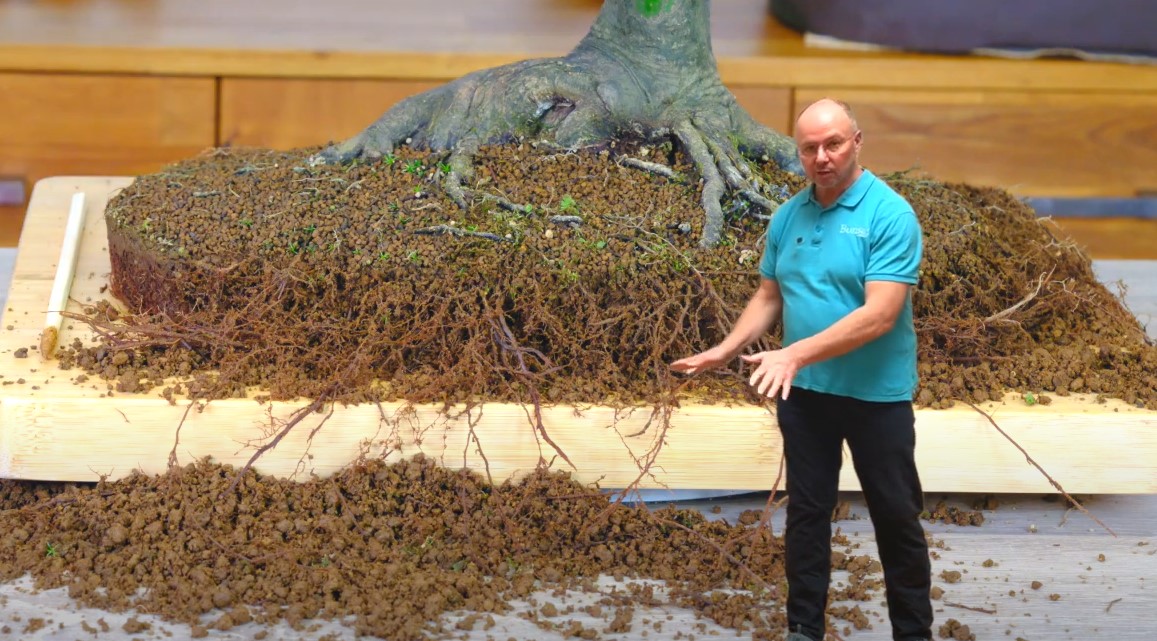
What we actually really need in our root ball, in the soil, is nice chunky roots that we can see and appreciate because that gives this tree strength and character. And then in the soil what we actually need is lots of fibrous root. Because, it’s this fibrous root that actually supplies the tree with all the nutrients that it needs. The big heavy roots like this, that’s just a conduit because what it needs is on the end here. This one’s got a little bit damaged. I’ll show you a healthy one but it’s still quite strong. These little roots here.
Now this one’s already started to deteriorate cos it’s quite heavy and it’s obviously been squashed against the pot. The ones inside are still nice and fibrous, very small and it’s the very fine root hairs on the end of these roots. It is these roots which actually absorb the water and nutrients.
So this bit along here doesn’t do anything except take the nutrients all the way up to the tree and this. This root here will just keep growing and it’ll keep growing round and round. That’s what it’ll do. Until something happens like it’s now this one’s slowed down it’s got squashed, I expect, but all of them they will just keep growing. That’s what’s really quite amazing about the root system is they’re continually growing until something happens that stops it from growing. Then another root alongside it will take over and start growing. It’s this continual search for nutrients and that’s what the roots are trying to do and once we put them into a container of course they can’t do that.
The Role of Soil and Fungi
A full-sized tree can spread out its roots and keep looking and searching, and it actually has help as well. We’ll probably go onto that in another video. It has help in finding nutrients, there’s a fungus in the ground that all trees have, as far as I know all trees, and that helps them find the nutrients. That’s why what we need is lots and lots of fibrous root and that’s why we root prune to avoid this situation.
Look at that and we’ve got all these little side roots all these little lateral roots here. I’ve teased out a little bit of the root ball already here. This is just hard grade Akadama. This was repotted in, would have been the same time of year. It’s February the 11th 2025 and it would have been repotted similar time of year in 2021. So the Akadama is still performing quite well. We’ve got good drainage, inside it’s broken down because that’s obviously the older part of the root ball.
What Healthy Roots Look Like
Where we’ve got some lovely fine roots here, these white roots here they are actually just roots of weeds. Now these really fine roots here, that’s what we really need in our rootball. What we don’t want is larger ones like this. All right so that’s looking good, and what I’ll do is I’ll do some close-ups, some nice close-ups so you can see the different parts of the root. So here we can see very clearly what’s going on with our roots.
So, this root here you can see is quite powerful already and he’s going to keep on growing off in that direction and going to keep going round and round following the pot. But here we’ve got some lovely little rootlets, some little root buds that are just eager to get going and doing the same sort of thing to keep growing but we don’t need those ones we need these ones here.
Encouraging New Growth
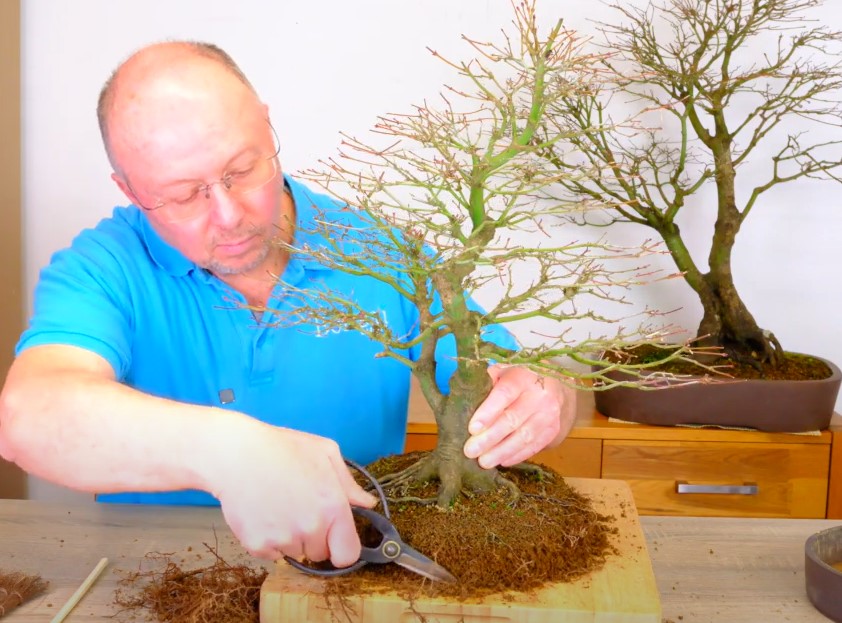
We’ve got some lovely little roots growing here, some little buds, but here we can see this fibrous root system already started so what we need to do is encourage these little rootlets, not these ones but the ones further down there the ones in the older parts of the root system, to become nice and fibrous. To really encourage those we need to remove this part of the root and then that’ll stimulate the growth further on down there, which is what we want. What I’m going to do now is I’m going to carry on teasing out all the way around the edge. I’m not going to touch the underside yet because at the moment the tree is sitting nice and flat and stable on the bench.
Why Repotting Matters
These are lovely, lovely fibrous roots there. Now there are two main reasons for repotting, there are other ones as well but they all kind of merge together really about plant health, about keeping the bonsai healthy. So we’ve got the fibrous roots, the pruning of the roots regularly whether it be a year on, two years on, three years on depending on the age of the bonsai that will change. The other one is of course you can see here all the old soil has been teased out we can remove that and then when we put it back into its pot, fresh soil all around the outside of the root ball where those new roots are going to grow into.
A Tip for Repotting Bonsai Trees
A little tip while you’re repotting. Take your time, and don’t rush the repotting. Some people think that they don’t want the roots out of the soil for too long so they tend to rush it. But that’s not a problem and all I do if it’s taking a bit longer is I just go around and water. Obviously these ones we’re going to cut off anyway, but around here we just go around and give them a little puff over with some water. That’ll keep them nice and moist and then we can carry on taking our time.
When to Repot Bonsai Trees
And now to the when. When should we repot our bonsai? When it comes to “when to repot” what I’m looking for, so I’m going to talk about outdoor bonsai now then we’ll do the indoor bonsai. That’s because it’s slightly different. Outdoor bonsai, deciduous ones like this, I will repot just before bud break. I’m looking for those buds there, once they start to swell then I know I’ve got to get it done.
So ideally what I’m doing is I’m looking to root prune before those buds start to wake up for spring. After the winter, so it’s gone through all of the winter, all of the cold weather, the winds, the rain etc etc with all its roots intact. Then just at the end of winter, before spring comes along before those buds start to swell that’s when I root prune and repot.
Indoor Bonsai Considerations
Pretty much the same even though the Evergreens, the junipers and the Pines, even though they are ticking over through the winter time it’s still a good time to do it before they really start to push out for spring. Now indoor bonsai, most of the trees especially the ones that I’ve grown the Chinese Elms, and the Tea Trees, the Sageretia’s, the Ficus and all those sorts of trees generally you can repot those any time of the year.
Final Thoughts
Just a few words before we go. If you’re uncertain about how much root to take off, just take off a little bit okay. Don’t overdo it. It’s better to do a little bit this year and then check it again next year and then go from there. Take care.
I’m going to go pruning actually quite a lot to do up there.


0 replies